


In my quest to learn what beauty truly is, I have asked one of the finest people I could think of to answer this question: My friend Br. Ionuț Giovanni Maria Olteanu O.P., a young Dominican friar from Rome, who has a true gift for guiding others in their faith. Let us discover together what Brother Giovanni thinks about the role that beauty plays in our relationship with God …
Our reflections shall begin with an introduction to some fundamentals of Catholic theology, as developed first and foremost by the revelations of the Holy Scripture, the Fathers of the Church, modern and contemporary theology, and not least of all some hints provided by simple human reason. Our aim is to understand the love of God according to Trinitarian theology and His relationship with the Catholic Church, as we cannot separate the Father, Son and Holy Spirit from His Church, which consists of all of us who are baptised (cfr. Rm., 12, 5; 1 Cor., 12, 13). We will not focus on the so-called “problem of the existence of God,” because we already identify God as the cause and finality of all there is in this world (cfr. Rev., 22, 13). To desire and attempt to prove His non-existence means to fall into the most absurd kind of relativism filled with contradictions, as at the end of the day the outright denial of His existence is nothing but a lowly form of self-affirmation.
Is man anything at all without God? Yes — but what is freedom without its limits? The implied answer to this question is precisely why we can say that the way of God is good and true; in fact, it is the only true way of life or at least the only way to have hope in life, which is to say eternal life beyond death. Only God can give us this eternal life and to grow closer with Him means to live ever closer to His infinite beauty. In our relationship with God Jesus Christ is the crucial link; He is the perfect image of both God and humanity. Christ is the truest expression of beauty in the eyes of God.
The call for beauty - mankind’s answer to God’s divine plan
In light of the ugliness that exists in the world and that tarnishes the beauty of creation, God’s divine providence is oftentimes declared a “problem” for Christianity during our modern times. However, as free sons of God, we have the power to defeat this supposed problem. We ought to comprehend that His call for beauty is not diminished by mankind’s free decision to choose the grotesque over the pure; at any given moment we can turn around and act in accordance with His desire for beauty, which means to choose a life dedicated to a higher purpose. The real question is not, “Where was God when disaster struck?” Much rather the question is, “Why did humanity not choose beauty when it had the chance?” God’s plan is not diminished by human action or the lack thereof. As humans, we have the task to understand what is best to choose and cannot simply blame our own shortcomings on God whenever we did not make our decisions in accordance with His divine will.
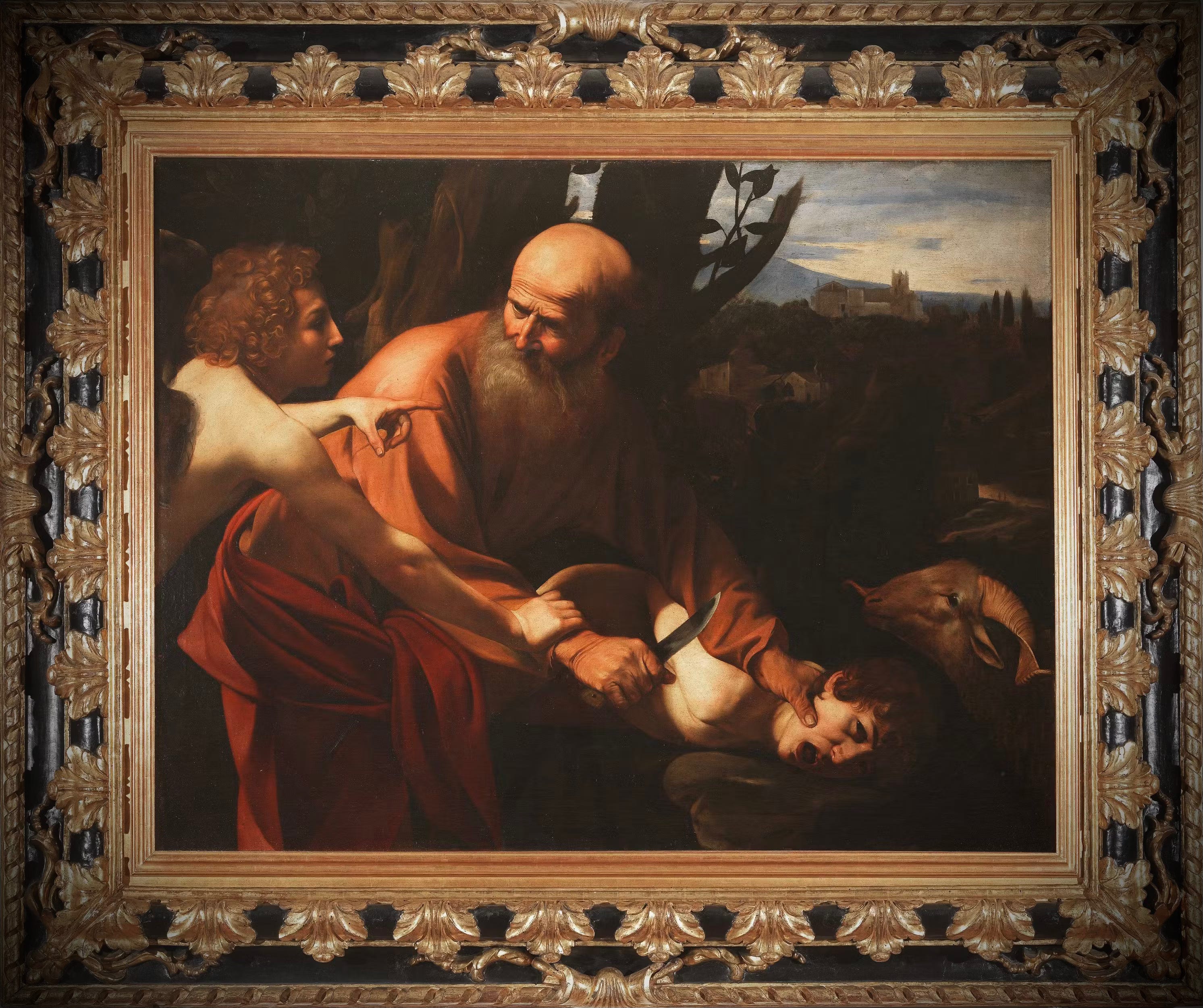
For example, Abraham, our father in faith, teaches us a good lesson in beauty: When led into the region of Moriah by God, he accepted to sacrifice his son, Isaac. He understood that God’s request was just and therefore saw a certain kind of beauty in its goodness; he trusted God with all his heart. Certainly we cannot say that he took joy in this divine command, for after all Isaac was his ”only son, whom [he loved]” (cfr. Gen., 22, 2). However, what this tells us is that the pursuit of truth, goodness, and beauty must not always be to our enjoyment; at times it entails sacrifices according to God’s will. Beauty in the deeper sense of the word it is not the purpose nor the goal itself; it is a pathway, a compass which guides us towards our real destination: The kingdom of God.
